Projects 04
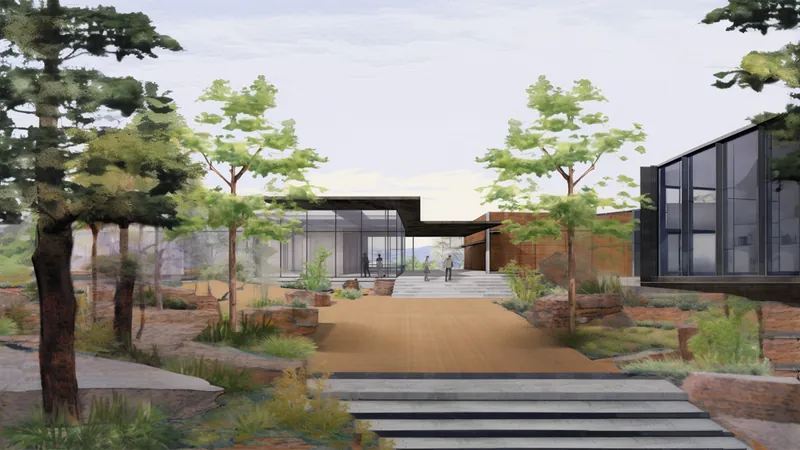
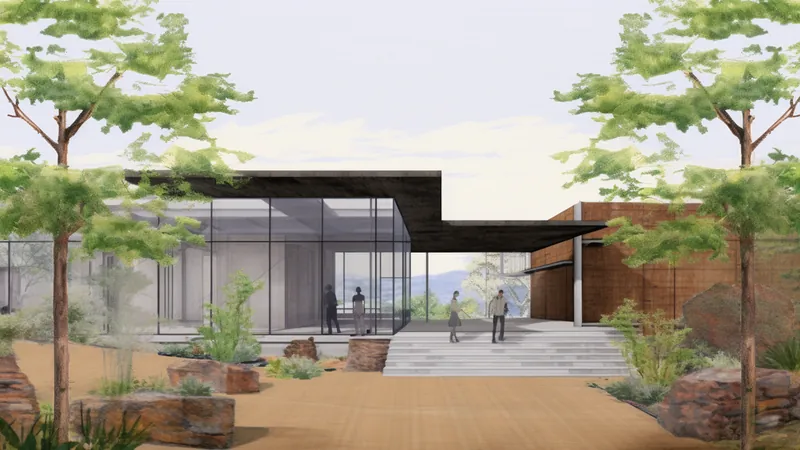
Oceanography Campus
The landscape scheme emphasizes the conservation of key native species, ensuring the preservation of essential ecological and cultural staples. Among these are Arbutus menziesii (Pacific madrone), Polypodium glycyrrhiza (liquorice fern), Vaccinium parvifolium (red huckleberry), Rubus spectabilis (salmonberry), Rubus parviflorus (thimbleberry), and Camassia quamash (common camas). These species play crucial roles in the maritime climates of the Pacific Northwest, supporting both indigenous communities and local wildlife.
Arbutus menziesii, with its striking red bark and evergreen foliage, provides critical habitat and food sources for birds and insects. Polypodium glycyrrhiza, often found on mossy rocks and tree trunks, contributes to the forest's biodiversity by supporting various fern-associated fauna.
Vaccinium parvifolium and Rubus spectabilis produce berries that are important traditional foods for Indigenous peoples and vital nourishment for birds and mammals. The thimbleberry, Rubus parviflorus, is similarly valued for its edible fruits and its role in stabilizing soil and preventing erosion.
Camassia quamash, with its vibrant blue flowers, is not only a visually striking component of the landscape but also a culturally significant plant for indigenous communities, who have used its bulbs as a food source for centuries.
By prioritizing the conservation and integration of these native species, the landscape scheme not only supports the region's biodiversity but also honours and sustains the cultural heritage and traditional practices of the indigenous peoples of the Pacific Northwest.